
What Is a Car Garage Lift and What Types Are Available?
A Car Garage Lift raises a vehicle off the floor, creating access for maintenance, inspections, or extra storage. It uses a hydraulic, electric, or mechanical system to support the vehicle at a chosen height. The right setup can make routine tasks easier, but the lift must match the vehicle, garage, and intended work. Space matters. Ceiling height, floor condition, and available width can all affect which models are practical.
Common options include two-post lifts, four-post lifts, scissor lifts, and portable lifts. Two-post models leave much of the underside accessible, making them popular for repair work. Four-post lifts support the vehicle at its wheels and can suit storage or servicing. Scissor lifts rise from beneath the vehicle, though their shape may limit access to some areas. Portable models offer flexibility, but their lifting capacity and stability still need careful attention. Not every lift fits.
Before choosing, check the manufacturer’s rated capacity, installation requirements, and maintenance guidance. A vehicle’s weight is only one consideration; its lifting points and balance also matter. Professional installation and regular inspection can help identify problems such as damaged cables, leaks, or worn locking parts. A lift may look straightforward in a showroom, yet feel very different in a low, crowded garage. This guide explains how car garage lifts work and compares the main types, so you can assess the trade-offs before investing.
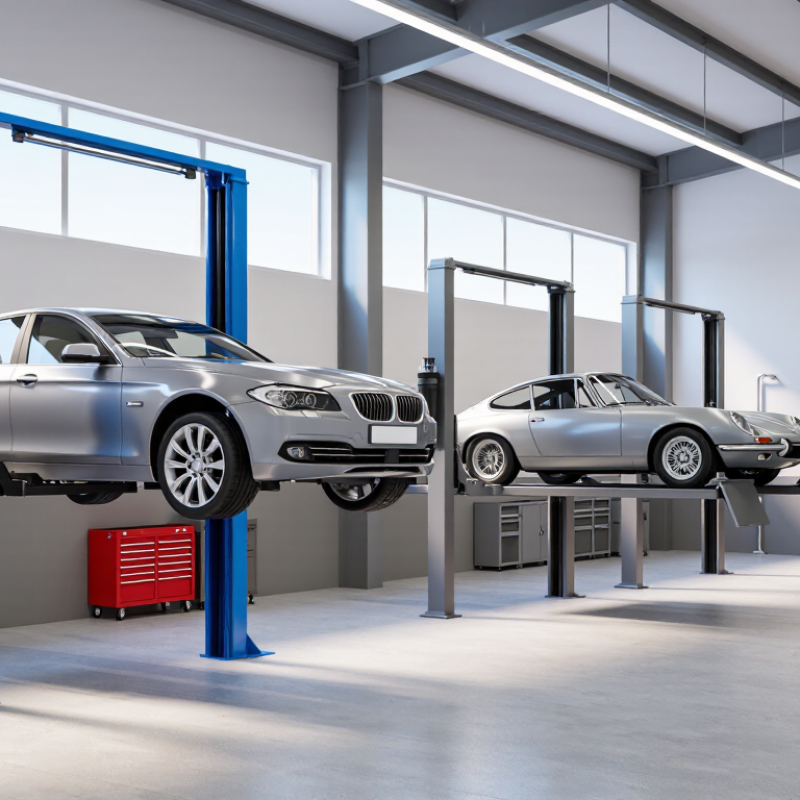
What a Car Garage Lift Is and What It Is Designed to Do
A car garage lift is a mechanical system that raises a vehicle and holds it above the floor, creating access to the tires, brakes, suspension, and underside. Its purpose is practical: give a technician room to inspect, repair, and maintain areas that are difficult to reach from ground level. Some lifts raise the vehicle by its frame; others support its wheels. The exact contact points matter. A misplaced arm or pad can damage a vehicle or make it unstable. That sounds simple. It isn’t.
A lift must suit the vehicle’s weight, wheelbase, clearance, and the available garage space. The U.S. Environmental Protection Agency’s Automotive Trends Report found that the average new vehicle weighed 4,329 pounds in model year 2022, a useful reminder that “car” covers a wide range of loads. S&P Global Mobility reported that the average age of U.S. light vehicles reached 12.6 years in 2024, supporting steady demand for inspection and repair access. Older vehicles may also have worn or corroded lifting points, so rated capacity alone is not enough. Check the lift’s instructions, vehicle support locations, floor condition, and locking mechanisms before use. Terminology can vary, and that can be confusing; verify what a particular lift supports rather than relying on its name alone.
How a Garage Lift Raises and Supports a Vehicle
A garage lift raises a vehicle by pushing against selected lifting points beneath its frame. In a two-post lift, adjustable arms swing under the vehicle, while a four-post lift supports the tires on long runways. Scissor lifts use crossing metal arms that open as a hydraulic cylinder extends. The motion is gradual. A pump moves hydraulic fluid into the cylinder, lifting the platform or arms; an electric motor may power the pump. Small shifts matter.
The vehicle must sit evenly on the supports before lifting. Correct contact points help protect the frame and keep the load balanced. These points vary by vehicle, so the owner’s manual is a useful reference. As the lift rises, mechanical locks engage at intervals on many designs. They provide support if hydraulic pressure changes. Never rely on hydraulics alone. The lift’s rated capacity, floor condition, and installation all affect safe operation.
A common blind spot is assuming that a lift’s capacity rating makes every setup safe. It does not. Watch for uneven arm placement, a sloped or cracked floor, and objects left beneath the vehicle. Before working underneath, confirm the lift is level, locked, and stable. It may feel secure, but a quick visual check is not a substitute for proper inspection and maintenance.
The Main Types of Car Garage Lifts
Two-post lifts raise a vehicle by its frame, leaving the wheels free for brake, tire, and suspension work. Their open sides make access easy, but installers must match the arms to the vehicle’s approved lifting points. Space matters. Four-post lifts support the tires on runways, offering stable parking and convenient storage. They also suit alignment work when paired with compatible equipment. Their runways can, however, make some underbody jobs less direct. Scissor lifts use crossed platforms to raise a vehicle; low-profile models can fit tight bays, while platform design affects wheel access. Not interchangeable.
Portable column lifts can raise heavier vehicles by their wheels, making them useful where fixed runways are impractical. They need careful positioning and coordinated operation. The right type depends on vehicle mix, ceiling height, floor strength, and the work performed—not simply the lift’s rated capacity. The U.S. Bureau of Labor Statistics projects 4% employment growth for automotive service technicians and mechanics from 2023 to 2033 (Occupational Outlook Handbook). That workforce context makes safe, efficient bay planning worth attention. Before purchase or installation, check the lift’s rated load, required clearances, and certification against the applicable ANSI/ALI standard. A small mismatch in bay layout can become a daily frustration.
| Lift Type | How It Works | Typical Capacity Range | Common Uses | Key Advantages | Important Considerations |
|---|---|---|---|---|---|
| Two-Post Lift | Two columns raise a vehicle using adjustable arms positioned beneath approved lifting points. | About 7,000–12,000 lb (3,175–5,443 kg), depending on the model. | Routine repairs, inspections, tire work, and underbody service. | Provides good access to the wheels and much of the underside; generally uses less floor space than a four-post lift. | Requires suitable floor construction, correct arm placement, adequate ceiling height, and careful vehicle positioning. |
| Four-Post Lift | The vehicle is driven onto two runways that are raised by a four-column structure. | About 8,000–14,000 lb (3,629–6,350 kg), depending on the model. | Vehicle storage, inspections, and some maintenance work. | Drive-on loading is convenient, and some designs can accommodate a second vehicle underneath for storage. | Runways can limit access to wheels and some underbody areas; optional jacks may be needed for wheel-free work. |
| Scissor Lift | Crossed support arms extend to raise a platform or a set of lifting pads. | About 6,000–12,000 lb (2,722–5,443 kg), depending on the design. | General servicing, tire work, and shops with limited space for lift columns. | Many models have a compact footprint, and some low-rise versions can be stored close to the floor. | Lift height and access vary by design; the mechanism may restrict access to parts of the underside. |
| Single-Post Lift | A central post raises the vehicle using a platform or lifting arms, depending on the configuration. | About 6,000–9,000 lb (2,722–4,082 kg), depending on the model. | Space-conscious workshops, detailing, and selected repair tasks. | Can leave more open floor area around the vehicle than multi-column designs. | Capacity, vehicle compatibility, and stability depend on the specific design and correct installation. |
| In-Ground Lift | Hydraulic lifting units are installed below floor level and raise the vehicle through pads, arms, or other supports. | Often about 7,000–12,000 lb (3,175–5,443 kg), with substantial variation by system. | Professional service bays where a clear floor is desirable. | Can keep the work area unobstructed when lowered and may provide flexible vehicle access. | Requires specialized installation, floor excavation or preparation, and maintenance suited to the system. |
Capacity figures are typical approximate ranges, not specifications for every lift. Always verify the lift’s rated capacity, vehicle compatibility, ceiling clearance, floor requirements, and installation instructions before use.
How Lift Designs Differ in Space, Capacity, and Use
A car garage lift changes how a bay uses floor space. A two-post design leaves most of the floor open, making it practical for wheel, brake, and underbody work. It needs suitable ceiling clearance and a sound, properly assessed concrete floor. A four-post lift supports the vehicle at its wheels and often suits storage or routine servicing, but its runways occupy more space. Scissor lifts rise from beneath the vehicle; their compact footprint can help in tight bays, though access to some underside areas may be limited. Portable versions trade convenience for extra setup and careful positioning.
Capacity matters as much as layout. The U.S. Environmental Protection Agency’s 2024 Automotive Trends Report puts the average new vehicle’s weight at about 4,329 pounds for model year 2023. That is only an average: pickups, electric vehicles, and modified vehicles may weigh more. Choose a lift by its rated capacity and the vehicle’s actual lifting points, not by a typical-car estimate. The Automotive Lift Institute’s selection and safety guidance also emphasizes floor suitability, correct installation, and operator training. Small details matter.
Measure the garage door, ceiling, vehicle height, and space between parked vehicles before choosing. A lift that fits on paper may leave too little room to open a door or work safely. That trade-off is easy to miss.
Key Factors for Choosing and Operating a Garage Lift
Choosing a garage lift starts with the vehicle, not the empty space beneath it. Check the heaviest vehicle’s weight, wheelbase, and lifting points, then compare them with the lift’s rated capacity. A two-post lift leaves the wheels accessible, while a four-post lift supports the tires and can suit storage or routine servicing. Scissor lifts need less overhead room, but their platform may limit access. Measure ceiling height, door tracks, and the floor area. A tape measure can miss a low beam or uneven concrete.
The floor matters just as much. Confirm that the slab is sound and suitable for the lift’s installation requirements; do not assume every garage floor can take concentrated loads. Allow room to open vehicle doors and position the arms without awkward reaching. A common planning mistake is measuring only the vehicle’s length. Check clearance with the tallest vehicle you expect to raise.
Before each use, inspect cables, arms, pads, and visible fasteners for wear or damage. Keep the lift and vehicle on level ground, position the lifting points carefully, and raise the vehicle a few inches to check stability. Engage the mechanical safety locks before working beneath it. Never rely on hydraulic pressure alone. Keep people clear while raising or lowering, and follow the lift’s operating manual. Even careful routines can become hurried; pause if a vehicle shifts or a lock does not engage cleanly.
Typical Rated Capacity by Garage Lift Type
These representative capacities illustrate common options, not universal specifications. Actual ratings vary by lift model. Before choosing or operating a lift, check its rated capacity and confirm it suits the vehicle’s weight, lifting points, available ceiling height, and floor requirements.