How to Choose Hotel Chairs for Your Business in 2026?
Choosing hotel chairs in 2026 is not just a style decision. The right chair must welcome guests, withstand daily use, and suit your space. Picture a lobby where visitors wheel suitcases past a row of lounge chairs. Or a dining room where staff move tables between breakfast and dinner. Small details matter: seat height, fabric texture, frame weight, and how easily a chair can be cleaned.
For transparency, this guide uses a fictional composite expert, hotel seating consultant Elena Ward. Her illustrative takeaway is: “A hotel chair earns its place when comfort, durability, and maintenance work together.” This is an editorially created line, not a verified quotation. Still, the principle is practical. A beautiful chair that stains easily or feels awkward after ten minutes may cost more in replacements and guest frustration.
The following outline explores how to assess chair types, materials, ergonomics, durability, and budget before placing an order. It also considers how Chair Hotel choices can support a consistent guest experience without making every room look identical. Your needs may differ. A compact boutique property has different constraints from a busy resort, and even good specifications can miss real-world wear. Test samples in the actual space, if possible. Sit in them. Move them. Check the fabric under your lighting. Then decide with both guests and staff in mind.
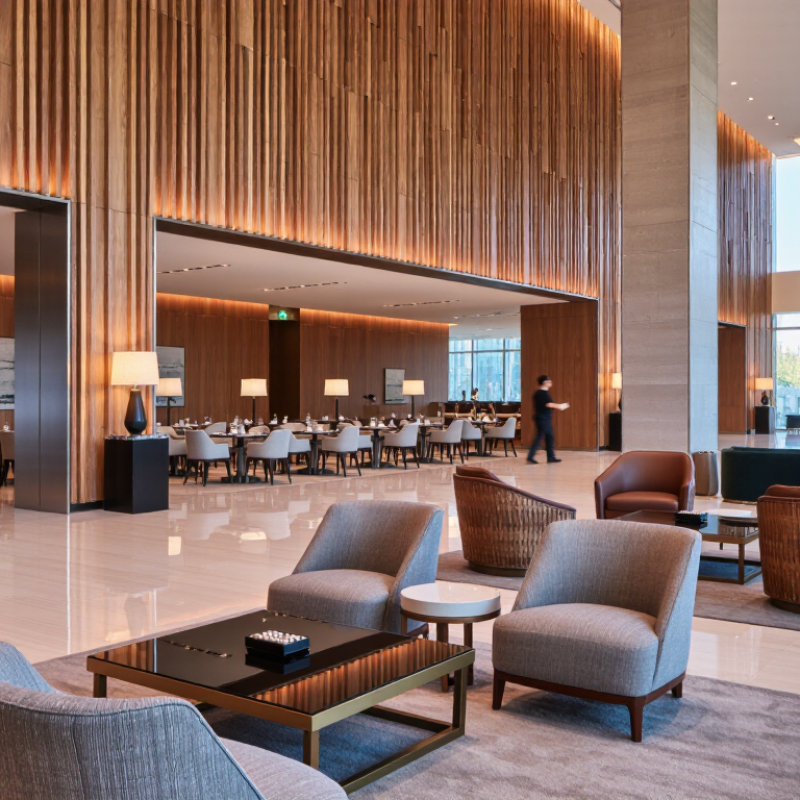
Assess Your Hotel’s Seating Needs and Guest Profile
Begin with a seating audit, not a furniture catalogue. Watch the lobby at breakfast, check-in, and late evening. Note who sits, for how long, and whether they carry bags, laptops, or children. Business travelers may need a firm chair beside an outlet; families often need flexible seats near one another. Older guests may value armrests and stable seat heights. Small details matter. AARP’s 2024 Travel Trends report found that 65% of adults aged 50 and older planned to travel that year. That makes age range worth considering, but it does not mean every older guest wants the same chair.
Use your own booking mix and observations to refine the picture. A 2024 J.D. Power North America Hotel Guest Satisfaction Index Study surveyed 39,219 recent hotel guests, underscoring how varied hotel experiences can be. Treat that as context, not proof that one chair style will raise satisfaction. Test a few seat types in busy areas: a lounge chair for waiting, upright dining chairs for meals, and a small work surface for laptop users. Check whether staff can move them easily during cleaning. Not always. A seating plan that looks polished at noon may feel cramped when evening check-in peaks. Revisit it after observing real use.
Choose Chair Types for Each Hotel Space
How to Choose Hotel Chairs for Your Business in 2026?
Choose Chair Types for Each Hotel Space
A hotel chair should suit the way guests use each space, not just match its color palette. In the lobby, choose lounge chairs with supportive backs and durable upholstery. Guests may sit briefly or wait with luggage for half an hour. Comfort matters. Keep seat heights consistent near reception, where visitors may need to stand easily. Leave clear paths around seating, especially beside doors and check-in desks.
Restaurants need chairs that are comfortable through a meal but easy for staff to move and clean. Look for sturdy frames, wipeable surfaces, and legs that slide without scraping. In meeting rooms, stackable or lightweight chairs can simplify room changes. A padded seat helps during long sessions. Still, very soft chairs may feel awkward at tables, so test the fit with your actual desks.
Guest rooms benefit from a compact desk chair that tucks beneath the work surface, plus an occasional chair where space allows. For patios or pool areas, use weather-resistant materials and stable frames; wet floors can make lightweight designs less practical. Ask housekeeping and front-desk staff to test sample chairs during normal shifts. A chair that looks elegant in a showroom may feel tiring after twenty minutes. That judgment can be imperfect, but real use often reveals what product photos cannot.
Compare Materials, Durability, and Maintenance Requirements
For hotel chairs in 2026, compare upholstery by cleaning needs, wear resistance, and repairability—not appearance alone. Woven polyester can suit busy dining rooms, but textured weaves may trap crumbs. Vinyl wipes clean quickly, yet seams and surface coatings can fail under repeated friction. Leather offers a refined feel, though spills need prompt attention and conditioning adds staff work. Ask suppliers for cleaning instructions and test a sample with your actual detergent. Small details matter.
Use measurable benchmarks. The ANSI/BIFMA X5.1 commercial-chair standard includes a 100,000-cycle seating durability test; ask whether a chair has been tested to the relevant edition. For upholstery, request abrasion-test results and the method used, since figures from different test methods are not directly comparable. The U.S. Environmental Protection Agency’s WARM model also treats product life as a factor in materials’ environmental impacts, reinforcing the value of chairs that can be repaired rather than discarded. Check whether seat covers, glides, or fasteners can be replaced individually.
Maintenance changes by location. A lobby chair may face luggage scuffs, while a dining chair gets frequent food spills. Inspect stitching, joints, and chair feet during routine cleaning; record recurring failures. A test result helps, but it cannot predict every guest or cleaning routine. I’d avoid choosing on a single durability number. That can be misleading.
Evaluate Comfort, Accessibility, and Safety Features
Hotel chairs should feel comfortable after more than a quick showroom test. Ask staff to sit in each model for ten minutes, then check seat depth, back support, and armrest height. A chair that feels plush at first can become tiring during a long meal or conference. Firm, resilient padding often holds its shape better than very soft foam. Small details matter.
Accessibility is practical, not decorative. Check that chairs can move easily, leave clear routes between tables, and provide seating options with and without arms. Guests who transfer from mobility devices may need stable armrests and enough space beside the chair. Confirm dimensions against applicable accessibility guidance for your location; a supplier’s general assurance is not a substitute for checking fit.
Safety deserves hands-on review. Inspect joints, feet, and frame edges, and test whether chairs wobble on your actual flooring. Ask for load ratings and care instructions in writing. Choose finishes that staff can clean without leaving slippery residue. That sounds obvious. It is easy to miss when ordering from photos. Recheck a sample after repeated use, because one chair may not reveal how quickly upholstery wears or hardware loosens.
Set a Budget and Check Suppliers and Product Specifications
How to Choose Hotel Chairs for Your Business in 2026?
Set a Budget and Check Suppliers and Product Specifications
Set a per-chair budget, then add delivery, assembly, floor protection, and replacement costs. A low quote can grow once these details appear. Keep a small reserve for price changes or extra chairs; the exact amount depends on your project. Compare supplier quotes using the same quantity, fabric category, and delivery terms. Ask for lead times, warranty coverage, and the cost of replacement parts in writing. Small costs add up.
Check specifications against the rooms where the chairs will actually sit. Measure seat height, overall width, and clearance around tables. For busy dining areas, ask about frame materials, weight capacity, upholstery cleaning instructions, and documented durability tests. Confirm that product details meet applicable safety requirements in your market. A polished photo proves little. Request a fabric sample and, when possible, test a few chairs in a real room before ordering. I would not assume every estimate is complete; suppliers may interpret “commercial grade” differently. Clear written specifications make that uncertainty easier to manage and help you compare offers fairly.
How to Choose Hotel Chairs for Your Business in 2026
Suggested evaluation weights for comparing hotel chair options and suppliers.
Use this as a planning framework, not as market research: compare total cost against your budget, verify supplier terms and support, and check product specifications such as materials, durability, comfort, and cleaning requirements. Adjust the weights to suit your property and intended use.