
China Top 10 Fiberglass Exterior Door Suppliers
Choosing reliable Fiberglass Exterior Doors suppliers in China requires more than comparing catalog photos and factory prices. This guide introduces ten notable manufacturers for buyers seeking durable entry systems, custom designs, and dependable export support. The evaluation considers production experience, material quality, engineering capability, and communication reliability.
A strong supplier should understand how fiberglass skins, insulated cores, weather seals, hinges, and glazing work together. Small details matter. A poorly fitted seal can admit wind-driven rain around the threshold. In coastal projects, hardware and fasteners also need suitable corrosion resistance. We will examine factory capacity, OEM flexibility, surface finishes, thermal performance, packaging methods, and available testing documents. Supplier references and consistent inspection records can reveal more than polished websites.
Evidence matters most.
The list is intended as a practical starting point, not an absolute ranking. Market information changes, and supplier claims require independent verification. Buyers should request current certifications, sample doors, warranty terms, production photographs, and third-party inspection options before placing an order. Some manufacturers may excel at high-volume standard models, while others perform better with architectural customization. That distinction is easy to miss. By comparing these differences, readers can identify suppliers that match project requirements, budget limits, climate conditions, and installation standards. The research may still contain gaps, especially when public factory data is incomplete. Careful due diligence remains essential.
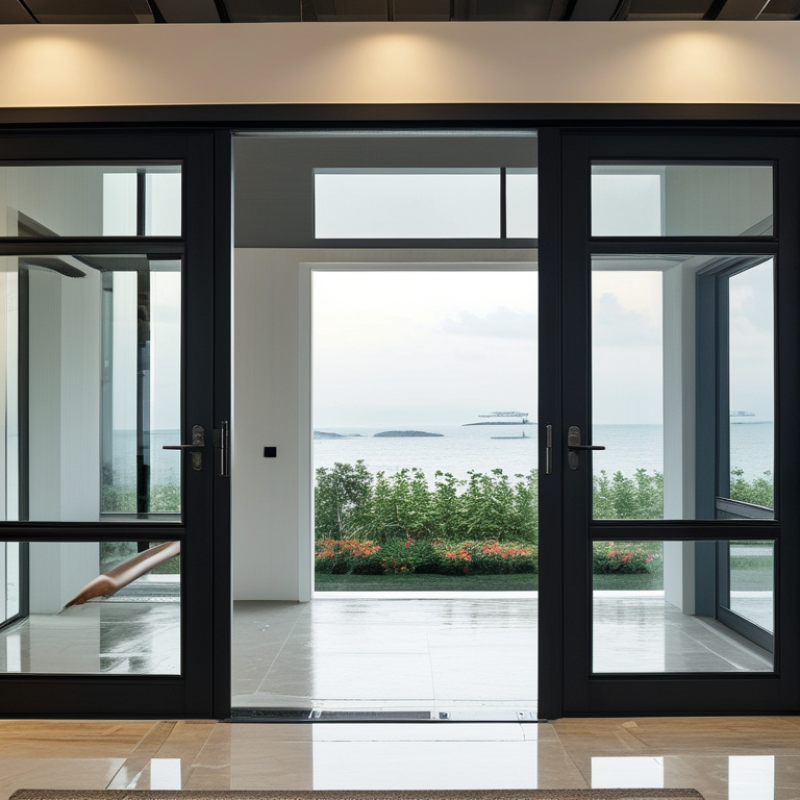
Fiberglass Exterior Doors: Materials, Features, and Market Applications
Fiberglass Exterior Doors: Materials, Features, and Market Applications
Fiberglass exterior doors use glass-fiber-reinforced polymer skins over engineered wood or polyurethane cores. This structure resists moisture better than many untreated wood assemblies. It also reduces thermal bridging around the entrance. The U.S. Department of Energy reports that space heating represented about 42% of U.S. household energy use in 2020. Therefore, an insulated door can support comfort, although installation quality remains decisive.
Current products may include low-emissivity glazing, adjustable thresholds, weatherstripping, and multi-point locking systems. Surface textures can imitate oak or walnut without requiring frequent repainting. Coastal housing, multifamily buildings, hotels, and detached homes commonly use these doors. Replacement projects also favor fiberglass because the material tolerates repeated temperature changes. The Freedonia Group’s Windows & Doors industry analysis identifies repair, remodeling, and new construction as major demand drivers across door markets.
For buyers comparing China’s top ten fiberglass exterior door suppliers, technical evidence matters more than catalog photography. Ask for independent results under ASTM E283 for air leakage, ASTM E331 for water penetration, and ASTM E330 for structural performance. NFRC-style U-factor and solar heat gain data can clarify energy behavior. Factory experience should include batch records, curing controls, and corner-joint inspections. The material is not flawless. Dark finishes may absorb intense solar heat, and poor sealing can defeat a high-performance core. I would also question unusually low prices, because thinner skins and weak hardware often appear only after installation. Product samples, third-party reports, and verified field references provide stronger evidence than marketing claims.
China Top 10 Fiberglass Exterior Door Suppliers - Fiberglass Exterior Doors: Materials, Features, and Market Applications
Material, performance, configuration, compliance, and application overview
| No. | Supplier Capability Profile | Typical Door-Skin Material | Core Construction | Key Features | Common Market Applications | Relevant Performance Tests or Standards |
|---|---|---|---|---|---|---|
| 01 | Residential entry-door specialist | Molded fiberglass-reinforced polymer skin with embossed wood-grain texture | Polyurethane foam or other insulated cellular core with engineered perimeter frame | Low routine maintenance, resistance to moisture-related swelling, paintable surface | Single-family homes, replacement entry systems, suburban housing | Air leakage, water penetration, structural loading, and forced-entry testing as specified by project requirements |
| 02 | Energy-efficiency door manufacturer | Smooth or lightly textured fiberglass-reinforced polymer skin | High-density polyurethane foam core with insulated rails and stiles | Reduced conductive heat transfer, improved thermal comfort, optional insulated glazing | Cold-climate housing, low-energy residential projects, thermally upgraded renovations | U-factor and solar heat-gain evaluation under the applicable regional energy-code program |
| 03 | Coastal and high-humidity door supplier | Water-resistant fiberglass composite skin with sealed edges | Closed-cell or low-moisture-absorption insulating core | Good resistance to humidity, salt-laden air, rot, and corrosion when compatible hardware is used | Coastal residences, hotels, resorts, waterfront developments | Water penetration testing, corrosion-resistance assessment for hardware, and local coastal building requirements |
| 04 | Decorative wood-look door producer | Deeply embossed fiberglass skin with factory-applied stain or paint system | Insulated foam core with composite or engineered-wood edge members | Wood appearance, design flexibility, resistance to checking and splitting compared with solid wood | Custom homes, remodels, premium residential entrances | Finish adhesion, weathering, dimensional stability, and water-resistance testing |
| 05 | Commercial exterior-door supplier | Impact-resistant fiberglass-reinforced composite face sheets | Heavy-duty structural frame with insulated or reinforced core options | Higher cycle durability, configurable hardware preparation, optional vision panels | Offices, retail buildings, educational facilities, low-rise commercial projects | Commercial exterior-door requirements, cycle testing, structural loading, air, and water tests |
| 06 | Fire-rated opening system supplier | Fire-tested fiberglass or composite door construction matched to a listed assembly | Fire-resistant core and compatible frame, seals, glazing, and hardware | Smoke-control and fire-resistance options only where the complete assembly is certified | Apartments, hospitality buildings, corridors, utility and service areas | Applicable fire-door rating and hose-stream or smoke-leakage tests; certification must cover the complete assembly |
| 07 | Impact and severe-weather door supplier | Reinforced fiberglass composite skin with impact-resistant glazing options | Structural core, reinforced lock stiles, heavy-duty hinges, and tested fastening system | Enhanced resistance to wind pressure and wind-borne debris when tested as a complete unit | Hurricane-prone regions, exposed coastal zones, storm-resilient construction | Regional wind-load, large-missile or small-missile impact, air, and water tests where required |
| 08 | Accessible and low-threshold door supplier | Smooth fiberglass composite skin suitable for durable, easy-clean finishes | Lightweight insulated core with low-threshold sill and adjustable hardware options | Reduced opening effort, adaptable clear width, and compatibility with automatic operators | Accessible housing, healthcare facilities, senior living, public buildings | Applicable accessibility codes, opening-force limits, clear-width requirements, and threshold provisions |
| 09 | Acoustic and privacy-door supplier | Dense fiberglass composite faces with perimeter compression seals | Higher-mass or acoustically optimized core with sealed frame assembly | Improved sound reduction when the slab, frame, seals, and surrounding wall are properly detailed | Hotels, apartments, offices, studios, and meeting spaces | Laboratory or field sound-transmission testing; acoustic performance applies to the complete opening |
| 10 | Modular and project-customization supplier | Fiberglass-reinforced polymer skin in smooth, textured, or panel-molded designs | Insulated composite construction with configurable frame, sill, glazing, and hardware packages | Multiple sizes, finishes, sidelites, transoms, swing directions, and pre-hung options | Prefabricated homes, apartment developments, renovation programs, export projects | Project-specific testing to applicable national or regional door, energy, accessibility, and safety codes |
Technical note: Actual performance depends on the complete door system, including the slab, frame, sill, glazing, seals, hardware, installation, and local code requirements. Test standards and certification should be verified for the intended market and application.
Related Posts
-

5 Tips for Choosing the Best Fiberglass Doors for Your Home
-
Exploring the Unique Features and Ideal Applications of Best Fiberglass Front Doors with Buying Tips
-
Top 10 Benefits of Fiberglass Front Doors for Your Home
-

Transform Your Business with High-Performance Fiberglass Doors: A Global Market Overview
-
Global Manufacturing Excellence Crafted in China with Premium Fiberglass Front Doors
-
What Makes Best Fiberglass Entry Doors the Ideal Choice for Your Home?