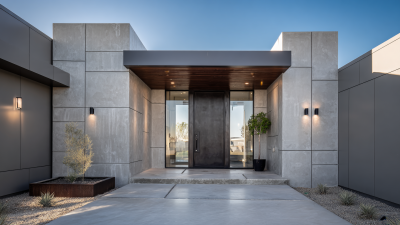
Who Are the Top Metal Exterior Door Manufacturers in China?

Choosing a Chinese manufacturer of Metal Exterior Doors calls for more than comparing catalog photos. Buyers need to examine construction, finish, weather resistance, hardware options, production consistency, and documented testing. The right choice depends on the building, climate, project budget, and installation requirements. A door that looks substantial in a showroom may perform differently after years of sun, rain, and daily use.

Architect Louis Sullivan’s maxim, “form ever follows function,” offers a useful lens for this decision. It is not a door-specific rule, but it reminds buyers to judge appearance alongside performance. Details matter. This guide will compare leading Chinese manufacturers by product range, customization, quality controls, export experience, and the clarity of their technical information. Readers should still verify specifications directly with each supplier. Claims in brochures are not a substitute for test reports, samples, or clear warranty terms.

There is no perfect shortlist. Company capabilities and product lines can change, and a strong factory may still be a poor fit for one project. That is the hard part. We will highlight what to check, what questions to ask, and where available evidence may leave gaps. The aim is a practical starting point—not a guarantee of performance.
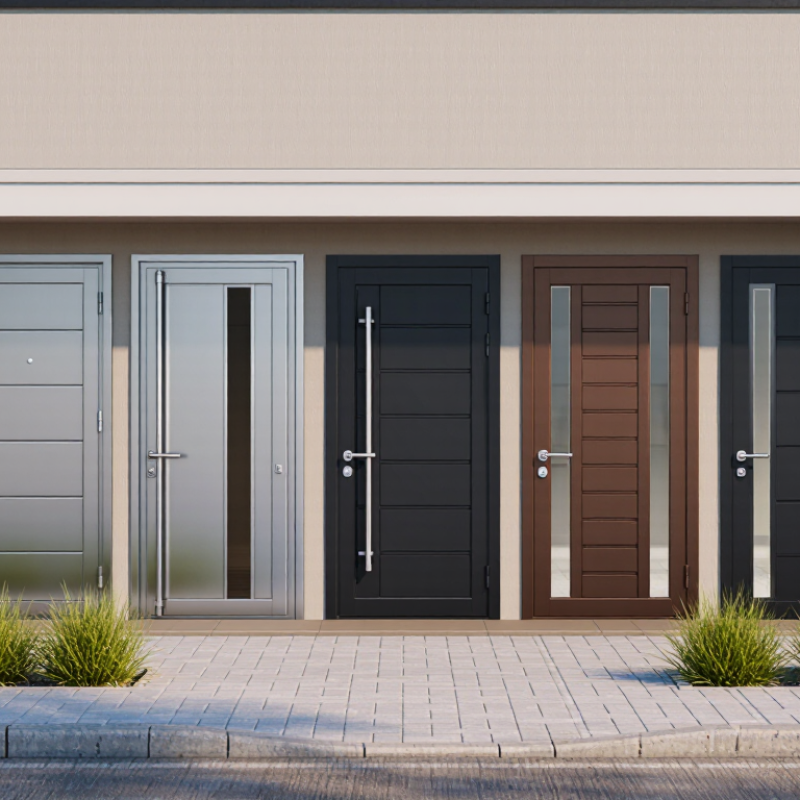
Who Are the Top Metal Exterior Door Manufacturers in China?

What Defines a Metal Exterior Door Manufacturer in China?

A metal exterior door manufacturer in China should be able to explain how a door is designed, made, and checked—not merely show a product catalogue. Ask whether the factory forms its own steel or aluminum panels, welds frames in-house, and applies its own coating. These details affect consistency. A useful conversation includes door thickness, core material, frame depth, hinge placement, weather seals, and hardware compatibility. Details matter.

Reliable manufacturers can provide drawings, material specifications, and inspection records for the proposed model. Ask how they check dimensions, welds, coating coverage, and operation before packing. If performance claims are made, request the test method and report for that exact construction. Do not assume that a strong-looking sample proves every production door will match it. Sometimes the gap is in the small details.

Production experience also shows in how a supplier handles changes. Can it revise a frame for a project opening, confirm the updated dimensions, and protect finished corners during shipping? Request a sample or a written approval process before a large order. Clear answers are useful, but vague promises are not evidence. Even a careful checklist cannot replace checking the delivered product against the agreed specifications.

How to Evaluate China’s Leading Metal Door Manufacturers

Evaluating China’s leading metal door manufacturers requires more than comparing catalogs or quoted prices. The World Steel Association reported that China produced about 1.005 billion tonnes of crude steel in 2024. That scale supports a broad supply base, but it does not prove a factory’s door quality. Scale is not proof. Ask for steel grade certificates, door-leaf thickness, coating specifications, and documented quality checks. Then compare these details with a physical sample, especially at the corners, welds, and hinge reinforcements.

Performance records matter just as much as appearance. UNEP’s 2024 Global Status Report for Buildings and Construction attributes 32% of global energy use and 34% of energy-related CO2 emissions to the sector in 2023. For exterior doors, request independently verifiable thermal, air-leakage, water-penetration, and wind-load test results. Check that the tested configuration matches the offered door, including glazing, frame, seals, and hardware. A certificate for a similar model is not enough. I would also review production traceability, inspection procedures, packaging, and realistic lead times. One gap often remains: a polished sample cannot show whether every production batch will match it. Ask how deviations are recorded and corrected, and verify the answer during a factory audit.

Profiles of Notable Chinese Metal Exterior Door Manufacturers

Chinese metal exterior door manufacturers often specialize in different product needs. Some focus on steel security doors for apartments and commercial buildings, with reinforced frames, multi-point locks, and powder-coated finishes. Others produce aluminum-clad or insulated steel doors for homes, where thermal performance and weather seals matter. The distinction is easy to miss in a catalog.

A notable manufacturer profile is the export-oriented factory offering custom sizes, surface colors, and hardware options. Its production may include sheet-metal forming, welding, coating, and assembly under one roof. Buyers should ask for door-section drawings, material specifications, and test records for air leakage, water resistance, and wind pressure. A clean showroom is not proof of consistent production.

Another profile is the project supplier accustomed to coordinating with builders and distributors. Such firms may support bulk orders, packaging requirements, and installation guidance, but customization can extend lead times. Ask how samples are approved and how defects are handled after delivery. Small details count. A threshold that sits unevenly or a seal that compresses poorly can cause trouble. “Top” depends on the building, climate, and service expectations; a low quote alone tells little.

Typical Steel Exterior Door Component Thicknesses

Indicative specification ranges commonly seen in steel door products; actual specifications vary by product and application. These ranges are not a universal standard or a comparison of manufacturers.

Values show approximate steel thickness in millimeters. Check the product specification and applicable local requirements before comparing doors.

Key Products, Materials, and Manufacturing Capabilities

China’s metal exterior door manufacturers typically produce steel security doors, insulated entry doors, fire-rated models, and aluminum-framed systems. Product ranges may include single or double leaves, glazed panels, and custom sizes for homes, apartments, or commercial buildings. Some factories also supply frames, hinges, locks, and weather seals as a matched set. Details matter.

Steel doors often use galvanized sheet to help resist corrosion, with mineral wool or polyurethane cores for insulation. Aluminum options are lighter and suit projects needing corrosion resistance or larger glazed sections. Surface finishes can include powder coating, wood-grain transfer, or laminated coverings. Ask for the actual core, sheet thickness, and finish specification; product names alone reveal little.

Manufacturing capabilities vary. Larger facilities may combine cutting, forming, welding, coating, and assembly, while smaller workshops may outsource some steps. Look for documented dimensional checks, coating inspections, and trial assemblies, then review samples under realistic conditions. A smooth display sample is not proof of consistent production. Still, a specification sheet rarely tells the whole story: request drawings, packaging details, and inspection records for the exact model and order. Seal alignment and hinge fit are easy to overlook, yet they affect installation and daily use.

Factors to Consider When Comparing Manufacturers

Comparing metal exterior door manufacturers starts with the door’s construction, not its brochure photos. Ask for the steel thickness, core material, frame design, and hardware specifications. These details affect weight, insulation, and how the door closes. A heavy leaf can still perform poorly if the frame is weak or the seals fit unevenly. Request a sample or a clear cross-section drawing. Check the corners, welds, and weatherstripping closely.

Finish and testing matter, too. Ask how the coating is applied and what preparation the metal receives before finishing. For coastal or humid sites, request relevant corrosion-test data rather than relying on broad claims. Verify that performance reports match the door configuration you plan to order, including its glazing and hardware. Small changes can affect results. I would not treat a certificate as a guarantee of every installation outcome.

Compare practical service details alongside specifications. Confirm custom-size limits, packaging, production lead times, replacement-part availability, and warranty terms in writing. Ask how the manufacturer handles defects, and whether inspection photos are provided before shipment. Communication is a real factor. A precise answer about a hinge or threshold often tells you more than polished marketing language. Still, one responsive contact does not prove consistent quality; check a production sample and clarify responsibilities before placing a large order.

Who Are the Top Metal Exterior Door Manufacturers in China? - Factors to Consider When Comparing Manufacturers

Comparison Factor What to Compare Evidence to Request Why It Matters
Product range and intended use Confirm whether the supplier makes steel, aluminum, or other metal exterior doors, and whether the offered models suit residential, commercial, or industrial applications. Product schedules, technical drawings, installation details, and examples of completed projects for similar applications. Exterior doors must be selected for their intended building use, exposure, and installation conditions.
Materials and construction Compare the specified metal type and thickness, frame construction, reinforcement, core or insulation material, seals, and hardware. Check that the specification applies to the complete door assembly. Bill of materials, cross-section drawings, material certificates where applicable, and a clearly identified sample or approved production sample. Material and assembly details affect durability, security, thermal performance, and resistance to weather exposure.
Air, water, and wind performance Compare tested performance for air leakage, water penetration, and resistance to wind load. Check test conditions, specimen size, and whether the tested configuration matches the proposed door. Reports from a qualified testing laboratory. Relevant references may include China’s GB/T 7106 test method and, where applicable, ASTM E283, ASTM E331, or ASTM E330. Test results are meaningful only when the test method and specimen configuration are suitable for the project and comparable across bids.
Thermal performance Compare the declared thermal transmittance or U-factor for the complete doorset, including frame and glazing if present. Verify the calculation or test method and boundary conditions. Product-specific test reports or documented calculations, plus details of the threshold, frame, core, glazing, and seals used. Thermal performance depends on the complete assembly and cannot be judged from the door leaf material alone.
Corrosion protection and finish Compare substrate preparation, primer and coating system, finish type, and suitability for the installation environment, including coastal or high-humidity locations. Coating specifications, documented surface-preparation process, applicable test reports, and written maintenance instructions. Exposure conditions and coating quality influence appearance and service life; a finish suitable for one environment may not suit another.
Security and hardware Review lock type, cylinder, hinges, reinforcement, multipoint locking options, and compatibility with the specified frame and door configuration. Hardware schedules, technical data sheets, assembly drawings, and applicable test or certification documents for the complete configuration. Security performance depends on the interaction of the door, frame, locks, hinges, fixings, and installation—not on one component alone.
Fire or smoke requirements If the project requires a fire- or smoke-rated doorset, verify that the exact door assembly, dimensions, hardware, glazing, and installation method are covered by the relevant approval. Current test and certification documents issued under the applicable requirements for the destination market, together with installation instructions. Fire and smoke performance applies to a defined assembly. A standard exterior door should not be assumed to have a fire rating.
Standards and certification scope Check which product and management-system standards are relevant to the order. For example, EN 14351-1 covers performance characteristics for external pedestrian doorsets and windows in its scope; ISO 9001 concerns quality-management systems. Current certificates and test reports; confirm issuing body, validity, product scope, factory location, and whether the documents cover the quoted model. A company management-system certificate does not by itself certify a specific door or establish its product performance.
Customization and project coordination Compare available sizes, opening directions, frame profiles, colors, glazing, hardware preparation, thresholds, and options for project-specific drawings. Approved shop drawings, a written specification, tolerance schedule, sample-approval process, and documented change-control procedure. Clear drawings and approvals help prevent mismatches between the doors, the building openings, and project requirements.
Quality control and traceability Ask how incoming materials, production stages, finished products, and nonconforming items are checked and recorded. Inspection and test plans, sample inspection records, product identification method, and final inspection documents for the order. Documented controls make it easier to verify that delivered products match the approved specification.
Packaging, shipping, and delivery Compare packaging for the chosen transport route, protection of corners and finishes, labeling, shipment documentation, and the agreed delivery schedule. Packaging specification, packing list format, production and delivery schedule, and written responsibility terms for transport and insurance. Metal doors can be damaged during handling and transport; packaging and delivery responsibilities should be agreed before production.
Warranty, service, and spare parts Compare warranty duration and exclusions, response process, availability of replacement hardware or parts, and support for installation questions. Written warranty terms, service contacts, spare-parts list, and clear procedures for reporting defects or damage. Written terms make responsibilities and after-sales support easier to evaluate before placing an order.

Comparison note: Request the same project specification and test conditions from every shortlisted supplier. Compare verified, product-specific evidence rather than relying on general marketing statements or management-system certificates alone.