
What Are the Top Stained Glass Hanging Panel Designs?
A Stained Glass Hanging Panel can turn plain window light into a changing feature of a room. Sunlight moves across colored pieces, and the pattern shifts with the hour. Some designs feel calm and balanced. Others bring bold color and movement. The best choice depends on the space, the available light, and the mood you want to create.
Louis Comfort Tiffany, the American artist and designer known for his work with decorative glass, wrote, “I have always striven to fix beauty in wood or stone or glass or pottery, in oil or watercolor, by using whatever seemed best suited to the expression of beauty; that has been my creed.” His words offer a useful lens for comparing panel designs: beauty should work with the material, not overwhelm it. This guide explores popular options, including floral motifs, geometric patterns, nature scenes, and traditional leaded designs. It also considers color, glass texture, panel size, and placement. These details matter. A dark border may sharpen a bright floral center, while clear glass can keep a small room feeling open. Yet a photograph cannot fully show how a panel looks in changing daylight. That is worth remembering when choosing. Not every design will feel right at first. The aim is to find a panel that suits your room and remains pleasing when the light changes.
Key Features That Define Stained Glass Hanging Panels
What Are the Top Stained Glass Hanging Panel Designs?
Key Features That Define Stained Glass Hanging Panels
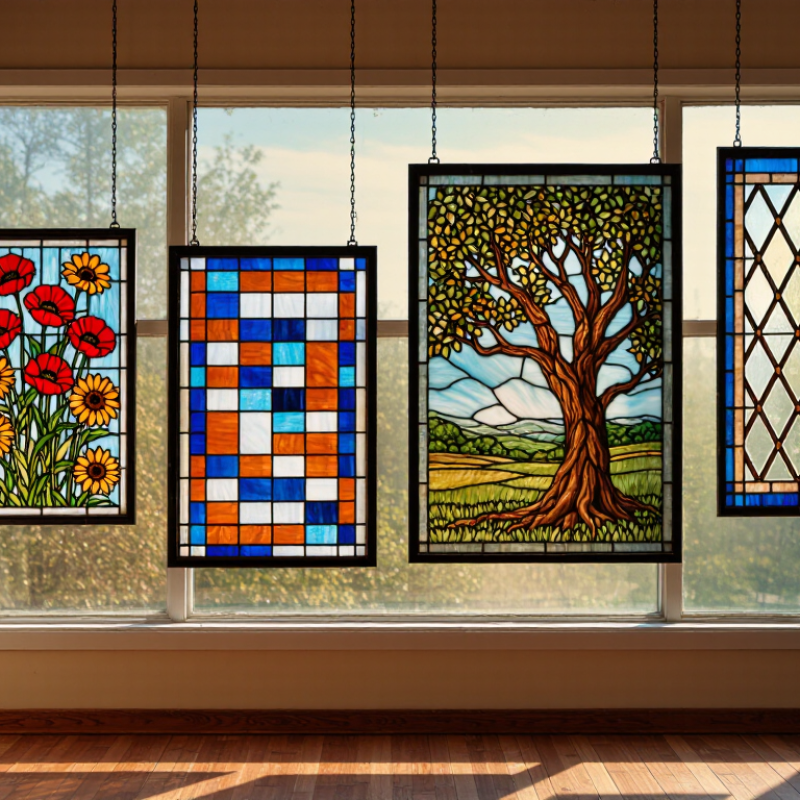
A stained glass hanging panel is shaped by its glass, structure, and relationship with light. Clear, textured, and colored pieces create different effects as daylight moves across a room. A rippled amber pane may cast soft shadows, while blue glass can appear cooler in morning light. The supporting came lines outline each piece and help hold the design together. Their pattern matters: straight lines feel orderly, while curved lines can suggest leaves or flowing water.
Good panels balance visual detail with practical construction. Look for joined glass pieces without obvious gaps, and check that the frame feels sturdy. Hanging hardware should suit the panel’s weight and the surface supporting it. A panel placed near a window may glow beautifully, but direct sun can make strong colors look different throughout the day. A perfectly even pattern can feel polished; a small handmade irregularity may add warmth. Not every irregularity, though, is harmless, so inspect the joints and edges carefully.
Tips: View the panel in both bright and muted light before choosing a spot. Keep it away from places where doors or curtains might strike it. Clean gently with a soft, slightly damp cloth; avoid pressing on the glass or came.
Geometric Designs: Symmetry, Repetition, and Color
Geometric stained-glass hanging panels rely on clear relationships: repeated shapes, balanced spacing, and deliberate color shifts. A centered diamond can anchor a window, while smaller amber triangles guide the eye outward. Symmetry makes the composition feel settled. Repetition adds rhythm. Yet identical shapes can look mechanical if every seam and color block follows a rigid grid. A small offset, or one unexpected blue piece, can make the pattern feel handmade. It may also disrupt the balance, so test the layout against daylight before soldering.
Color affects how much light appears to pass through a panel. For a useful technical reference, the National Fenestration Rating Council expresses visible transmittance on a scale from 0 to 1; higher values indicate more visible light. That rating applies to rated glazing products, not necessarily handmade stained-glass panels, so use it as context rather than a panel specification. In practice, compare sample pieces against the intended window at morning and afternoon angles. Deep ruby can read almost opaque on a shaded wall, while pale amber may cast a warm square across the floor. Geometric order helps. Still, color can surprise you.
Nature-Inspired Designs: Flowers, Birds, and Landscapes
Nature-inspired stained glass hanging panels bring garden colors indoors, but their appeal depends on thoughtful composition. A flower design might pair ruby petals with pale green leaves and a small amber center. Repeating every bloom can make a panel feel stiff. Varying petal shapes gives it a more natural rhythm. Leave some clear glass between the motifs; it lets daylight pass through without crowding the scene.
Bird panels benefit from a clear focal point. A bluebird perched on a curved branch reads well from across a room, while tiny feather details may disappear at a distance. Landscapes work differently. Bands of blue, green, and gold can suggest water, hills, and sunset without depicting every tree. That restraint often feels calmer. Still, an abstract scene may not look like the place its maker intended, and that is worth considering.
Before choosing a panel, check how its colors look in the room’s actual light. Morning sun can brighten yellow glass, while shaded windows may mute it. In practice, a simple hanging position helps the design remain visible and reduces swinging. Use a secure hook suited to the panel’s weight, and avoid letting the glass knock against the window frame. A soft, dry cloth is usually enough for routine dust.
Traditional and Contemporary Styles for Different Interiors
Traditional stained glass hanging panels suit interiors with visible craft and warm materials. Floral motifs, beveled borders, and small geometric repeats pair naturally with wood trim, antiques, or cottage-style rooms. Choose amber, green, or ruby accents for a softly colored glow. Keep the design in proportion to nearby windows and furniture. A dense pattern can darken a small room, especially on a north-facing wall. It may look elegant on paper, yet feel too busy once sunlight passes through.
Contemporary panels often use clean lines, larger areas of textured glass, or a restrained mix of clear and colored sections. These designs work well in modern kitchens, open-plan spaces, and rooms with simple furnishings. Asymmetry can add interest, but it should relate to the room’s existing shapes. A narrow panel beside a door, for example, may echo tall cabinets or vertical wall details. Less can be enough.
Tips: Measure the hanging space and check the light at different times of day. Hold colored samples near the window if possible. Use hanging hardware rated for the panel’s weight, and follow the maker’s installation guidance. Leave enough clearance for doors and curtains. One detail is easy to miss: a bright panel may cast colored light onto a nearby wall, changing the room’s appearance.
Choosing a Design by Color, Size, and Placement
Choose a panel after observing the window at morning, noon, and dusk. North-facing glass often benefits from saturated ruby, amber, or cobalt, which stays vivid in cooler light. Strong southern sun can make pale colors glow, but may also create sharp reflections. Hold a paper color sample against the glass. Small panels can feel surprisingly bold. For a narrow sidelight, try vertical motifs; above a sink, a wider landscape design can balance the view without blocking it.
Size should relate to the frame, not just the wall. Leave visible space around the panel so its lead lines remain legible. The U.S. Energy Information Administration’s 2018 Commercial Buildings Energy Consumption Survey found lighting used about 17% of commercial building electricity. That figure is not a claim that decorative glass saves energy; it is a useful reminder to consider daylight and glare together. Check the existing glazing and mounting method before ordering, especially for older frames. A detail that looks delicate in a catalog may feel busy at home. I’d mock up the outline with paper first, then live with it for a day. It is a little fussy, but placement is hard to undo.