What Are the Top Steel Exterior Doors for Global Buyers?
Choosing the right Steel Exterior Doors requires more than comparing photographs, prices, or decorative finishes. Global buyers face different climates, building practices, shipping routes, and installation conditions. A door that performs well in a dry inland city may struggle near salty coastal air. Small details matter. Look closely at galvanized steel, powder coating, insulated cores, thermal breaks, weather seals, hinges, and threshold design.
Building-science expert Dr. Joseph Lstiburek often states, “A building enclosure has to control rain, air, heat, and vapor.” This principle applies directly to exterior doors. A strong steel leaf is useful, but it cannot compensate for water entering around the frame. Buyers should examine tested air and water performance, thermal ratings, corrosion resistance, and hardware durability. Product documentation should be clear, current, and suitable for the intended climate.
This guide reviews leading Steel Exterior Doors for international purchasing decisions. It considers residential entrances, commercial projects, replacement work, and large-scale developments. The best option is not always the heaviest door. Sometimes, excessive weight creates installation problems and shipping costs. That is easy to overlook. We also consider customization, packaging, spare parts, warranty communication, and installer support. These factors may seem less impressive than a polished surface, yet they often determine long-term satisfaction. No ranking is perfect. Site conditions can expose weaknesses that catalog pages never mention. Therefore, buyers should compare verified performance data with local installer experience before committing to a supplier.
Types of Steel Exterior Doors for International Markets
What Are the Top Steel Exterior Doors for Global Buyers?
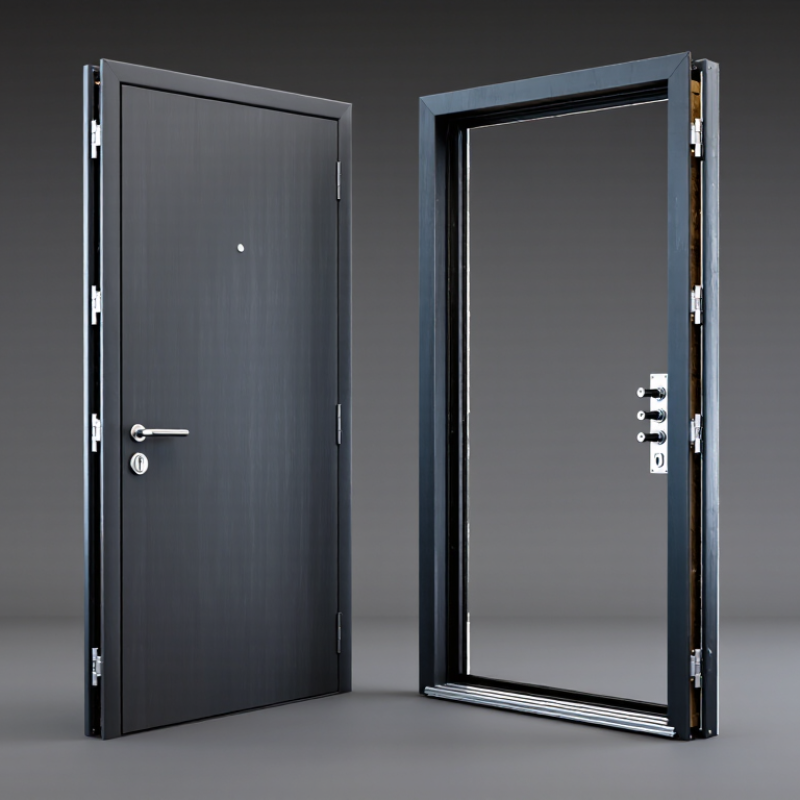
Steel exterior doors for international markets are not one universal product. Galvanized steel doors suit humid entrances because zinc coatings slow corrosion. However, coating thickness and edge protection deserve careful inspection. Insulated steel doors help control heat transfer in homes, warehouses, and commercial buildings. Their foam core, weather seals, and thermal breaks affect real performance. Small details matter.
Fire-rated steel doors serve stairwells, utility rooms, and industrial spaces. Their rating must match the project’s local building requirements.
Security steel doors use reinforced frames, multi-point locks, and stronger hinges. Not every site needs armor.
Glazed steel doors bring daylight to offices and retail entrances. Laminated or insulated glass can improve safety and energy efficiency.
For coastal or storm-prone regions, buyers should examine corrosion protection, drainage, wind resistance, and hardware durability. Project reviews often reveal a common mistake: selecting the door before confirming the wall opening. Measure twice. Door swing, threshold height, frame depth, and shipping dimensions can change installation costs. International buyers should request test reports, material specifications, maintenance instructions, and replacement-part details. Standards differ between countries, so an independent local professional should verify compliance. Factory finishes can also look different under strong sunlight. That detail is easy to overlook.
Key Performance Standards for Global Steel Door Buyers
Global steel exterior doors should be judged by tested performance, not by weight or glossy finishes. Buyers need documented air, water, wind, thermal, security, and fire results. EN 12207, EN 12208, and EN 12210 can help compare weather performance in many markets. Security ratings under EN 1627 may indicate resistance classes, but local codes can require different evidence. Ask for the complete test report, not only a sales sheet.
Thermal performance deserves close attention. A steel leaf with an insulated core, thermal breaks, and sealed glazing can reduce heat loss. Check the declared U-value, frame details, threshold design, and tested size. A low U-value alone can mislead. Condensation may still appear around a cold threshold in winter. Fire-rated assemblies require compatible frames, hardware, seals, and installation methods. A fire label on the door leaf cannot validate the whole assembly.
For international projects, confirm certification scope, factory quality controls, coating durability, and spare-part availability. Coastal buildings may need corrosion testing and a suitable protective system, while high-rise sites need verified wind-load data. Request samples with corner welds, hinge reinforcement, drainage paths, and gasket joints visible. Small details matter. I would also compare test conditions with the project’s climate and installation practice. This step is often skipped, and it can weaken otherwise strong specifications. No single standard covers every risk, so buyers should obtain local code review before ordering.
Key Fire-Resistance Benchmarks for Global Steel Exterior Door Buyers
Fire-resistance duration is a major performance criterion when specifying steel exterior door assemblies. The chart shows commonly specified North American fire-door rating durations in minutes; higher ratings require the complete tested door, frame, hardware, glazing, and installation system to comply with the applicable standard.
Reference framework: UL 10C and NFPA 252 fire-test practices. European projects commonly use EN 13501-2 classifications such as E, EW, and EI with a stated time period, for example EI₂ 60. Actual requirements vary by building code, occupancy, wall rating, climate, and project risk level.
How to Compare Security, Durability, and Energy Efficiency
For global buyers, a strong steel exterior door must balance security with practical installation conditions. EN 1627 defines resistance classes from RC1 to RC6, using controlled attack tests. RC3 can be suitable for many residential entrances, but classification alone does not guarantee safety. The frame, hinges, locks, glazing, and wall connection matter equally. Check complete-door test evidence, not only a steel thickness figure. A thick leaf can still fail at a weak threshold.
Durability depends on climate and maintenance. ASTM B117 salt-spray testing helps compare coatings, but it cannot predict exact service life outdoors. Coastal air, trapped moisture, and poor drainage may shorten performance sharply. Ask for corrosion-test methods, coating thickness, drainage details, and replacement-part availability. Energy efficiency also needs measurable evidence. U.S. Department of Energy guidance shows that windows can represent 25–30% of residential heating and cooling energy use, making glazed door panels important. Compare whole-door U-values, air-leakage results, and thermal-bridge design. The 2023 UNEP Global Status Report identifies buildings and construction as responsible for about 37% of global energy-related emissions. Small gaps matter. Yet comparisons remain imperfect: laboratory values may not reflect wind, dust, installation errors, or repeated use. A dependable specification includes tested performance, local climate assumptions, and clear installation tolerances.
What Are the Top Steel Exterior Doors for Global Buyers? - How to Compare Security, Durability, and Energy Efficiency
| Steel Exterior Door Type | Typical Construction | Security Potential | Thermal Performance (Typical Whole-Door U-Value) |
Durability and Corrosion Protection | Weather and Climate Suitability | Typical Service Life | Best Purchasing Use |
|---|---|---|---|---|---|---|---|
| Insulated Galvanized-Steel Security Door | Galvanized steel skins, mineral-wool or polyurethane core, reinforced lock area, adjustable frame, perimeter weather seals. | High Often available in tested RC2 or RC3 configurations when the complete door set includes an approved lock, hinges, frame, and glazing. |
Approximately 1.0–1.6 W/m²K Suitable for many residential and light-commercial exterior applications. |
Good resistance to impact and normal outdoor exposure. Hot-dip galvanizing, zinc-rich primer, powder coating, and sealed edges improve corrosion resistance. | Suitable for temperate, cold, and moderately humid environments. Coastal locations require enhanced coating and stainless or protected hardware. | Approximately 20–30 years with correct installation, drainage, and periodic coating and hardware maintenance. | General-purpose entrance doors where security, cost control, and balanced insulation are required. |
| Thermally Broken Steel Entrance Door | Steel frame and leaf separated by a low-conductivity thermal break, insulated core, multi-point locking, and compression seals. | High Can be specified with reinforced frames, laminated security glazing, and independently tested burglary-resistance assemblies. |
Approximately 0.8–1.4 W/m²K Lower U-values reduce conductive heat transfer; performance depends strongly on glazing and frame design. |
Very good structural stability. Durable finishes and isolated steel sections help reduce condensation-related corrosion. | Strong choice for cold climates, heated buildings, and areas with large indoor-outdoor temperature differences. | Approximately 25–40 years when protected from standing water and maintained according to the coating specification. | Energy-conscious residential, commercial, institutional, and high-performance building projects. |
| Heavy-Gauge Galvanized-Steel Security Door | Thicker steel skins, internal reinforcement channels, heavy-duty hinges, anti-pry frame details, and commercial-grade locking hardware. | Very High Commonly selected for higher security requirements; RC3 or higher must be confirmed through complete assembly testing rather than material thickness alone. |
Approximately 1.4–2.2 W/m²K Thicker steel and reinforcement may improve strength but do not automatically improve insulation. |
Excellent resistance to forced entry and impact. Corrosion protection depends on galvanizing quality, coating thickness, edge treatment, and maintenance. | Suitable for high-traffic entrances, warehouses, utility areas, and demanding commercial environments. | Approximately 25–40 years; hinges, closers, locks, and seals may require earlier replacement. | Projects prioritizing physical security, abuse resistance, and long-term structural robustness. |
| Steel Fire-Rated Exterior Door Set | Steel leaf and frame with fire-resistant core, intumescent seals, self-closing device, approved hinges, and fire-rated hardware. | High Security performance varies. Fire resistance and burglary resistance are separate properties and require separate test evidence. |
Approximately 1.5–2.5 W/m²K Fire-resistant cores and heavy construction may provide less insulation than specialized thermally broken systems. |
Good resistance to heat, impact, and frequent commercial use when the complete rated assembly is maintained. | Use only where the selected door set is approved for the intended exterior exposure and local fire regulations. | Approximately 20–30 years, subject to mandatory inspection of seals, closers, hinges, and fire-rated hardware. | Fire exits, plant rooms, service corridors, and buildings requiring certified fire compartmentation. |
| Stainless-Steel Exterior Door | Stainless-steel skins or frame, insulated core, concealed or surface-mounted hardware, and welded or mechanically joined components. | High Can be engineered for tested burglary resistance, although stainless steel alone does not define the security rating. |
Approximately 1.2–2.0 W/m²K Thermal performance depends on the core, frame design, thermal breaks, and glazing. |
Excellent corrosion resistance, particularly with appropriate stainless grades and correctly finished welds. Chloride exposure still requires cleaning and material selection. | Excellent for coastal, humid, hygienic, and high-maintenance environments when the correct stainless grade is specified. | Approximately 30–50 years in suitable environments with regular cleaning and hardware maintenance. | Coastal buildings, hospitals, food-processing facilities, laboratories, and premium commercial entrances. |
| Steel Door with Insulated Security Glazing | Insulated steel leaf and frame combined with double or triple glazing, laminated inner glass, multi-point locking, and compression seals. | Medium to High Security depends heavily on laminated glass thickness, glazing retention, lock system, and complete assembly testing. |
Approximately 0.9–1.6 W/m²K Low-emissivity coated insulating glass can improve energy performance, but the glass edge and frame remain important. |
Good when steel is galvanized or properly coated. Glazing seals, drainage paths, and hardware require routine inspection. | Suitable for entrances requiring daylight, visibility, and balanced thermal performance. Solar-control glass may be needed in hot climates. | Approximately 20–30 years; glazing seals and operating hardware may have shorter replacement cycles. | Commercial entrances, offices, hotels, schools, and residential projects requiring visibility and natural light. |
| Steel Double-Leaf Entrance Door | Two coordinated steel leaves, reinforced meeting stile, flush bolts, multi-point locking, adjustable frame, and continuous weather seals. | Medium to High Security is strongly affected by the meeting-stile design, inactive-leaf bolts, hinges, and frame anchoring. |
Approximately 1.3–2.1 W/m²K Wider openings can increase air leakage if the meeting stile and seals are not precisely manufactured and installed. |
Good structural performance for large openings. Door alignment and seal adjustment are essential for long-term operation. | Suitable for commercial buildings, equipment access, public facilities, and wider exterior openings. | Approximately 20–35 years with regular adjustment of closers, bolts, hinges, and weather seals. | Large entrances where access width, delivery movement, or emergency egress is important. |
Choosing Steel Door Designs for Different Climate Zones
What Are the Top Steel Exterior Doors for Global Buyers?
Steel exterior doors perform differently across climate zones. The best design balances thermal control, drainage, security, and service life. The IEA’s 2023 Global Status Report for Buildings and Construction states that buildings consume about 30% of global final energy and produce roughly 26% of energy-related emissions. A poorly sealed entry door can weaken an efficient building envelope.
In cold zones, choose insulated steel leaves, thermally broken frames, compression gaskets, and low-conductivity thresholds. ENERGY STAR reports that air sealing can reduce heating and cooling costs by about 15%. In hot, dry regions, use light-reflective finishes, shaded entrances, and insulated cores. Dark steel can become painfully hot. Tropical and coastal buyers need raised thresholds, drainage paths, protected hardware, and corrosion protection classified under ISO 12944. For humid interiors, overhangs help, but they cannot replace proper seals. Design follows weather. Some specifications still overfocus on thickness. That is a mistake.
Tips: Ask for U-factor, solar reflectance, air-leakage, and water-penetration test results. Match the frame and threshold to the door slab. Inspect welded joints and coating damage before installation. In coastal locations, schedule freshwater rinsing and check fasteners regularly. The World Meteorological Organization’s State of the Global Climate reports continuing temperature extremes, so historic averages may be insufficient. I would allow for future heat and heavier rainfall. It costs less than replacing a damaged threshold.
Installation, Certification, and Maintenance Considerations
For global buyers, a top steel exterior door begins with correct installation, not a glossy specification sheet. Before ordering, confirm wall dimensions, hinge side, threshold height, and local wind exposure. A 3 mm measuring error can create uneven gaps and expensive site adjustments. Installers should plumb the frame, anchor it to structural material, and seal the perimeter continuously. Use compatible fasteners near coastal sites. Salt air is unforgiving. Drainage holes must remain open, while the threshold should slope away from the building. I have seen strong doors fail early because installers compressed the weather seal or ignored floor movement. The lesson is uncomfortable: premium steel cannot correct careless preparation.
Certification deserves equal attention. Ask for test reports covering air leakage, water penetration, wind pressure, fire performance, and forced-entry resistance where required. Check the testing laboratory, report date, product configuration, and applicable regional standard. A certificate for one size or glass type may not cover another. That detail is often missed. Maintenance should be practical for the buyer’s climate. Inspect hinges, locks, seals, drainage paths, and paint damage every six months. Wash exposed steel with mild soap, then dry it completely. Repair scratches quickly, especially at cut edges and welded joints. In humid regions, hidden corrosion can progress before staining appears. Keep records of inspections and replacement parts. They improve accountability. Yet maintenance schedules need revision after the first winter or monsoon season. Real buildings behave differently from test chambers.
Related Posts
-
Leveraging Trade Tariffs: How Chinese-Made Best Steel Exterior Doors Thrive Amidst US-China Tensions
-
Top Tips for Choosing Steel Exterior Doors for Your Home?
-
Discover How Steel Front Doors Are Trending at the 137th Canton Fair 2025 in Guangzhou
-
Solutions for Choosing the Right Steel Entry Doors for Your Business
-
Why Steel Exterior Doors Are the Ultimate Choice for Security and Style in Modern Homes
-
What is the Best Steel Exterior Doors for Energy Efficiency and Security