2026 Best Fiberglass Front Doors for Global Buyers?
Choosing the 2026 best Fiberglass Front Doors requires more than comparing colors, prices, or online ratings. Global buyers face different climates, building practices, security expectations, and maintenance routines. A door that performs well in Toronto may need different specifications in Dubai, Singapore, or coastal Australia.
Brad Loveless, a recognized Therma-Tru product expert, has stated, “A door system is only as good as its installation.” This practical warning deserves attention. Even a strong fiberglass slab can lose performance through poor flashing, uneven framing, weak weatherstripping, or incorrect hardware fitting. Buyers should examine the complete system, including the frame, sill, hinges, glazing, finish, and installation guidance.
Real performance appears in small details. Does the surface resist fading after intense sunlight? Does the sill manage wind-driven rain? Can the lock operate smoothly after seasonal movement? These questions matter more than a polished product photograph. Fiberglass Front Doors can provide durability, insulation, and realistic wood textures, but they are not maintenance-free or universally perfect. Coastal salt, extreme heat, freezing temperatures, and heavy humidity can expose weaknesses over time.
There is no single winner for every market. That is the uncomfortable part. The best choice depends on verified test data, local compatibility, installer experience, and long-term service support. This guide compares leading options through those practical standards. It also considers design flexibility, energy performance, security features, warranty clarity, and value for global buyers. Some conclusions may remain conditional, because real homes rarely match laboratory conditions.
What Fiberglass Front Doors Are and Why Global Buyers Choose Them
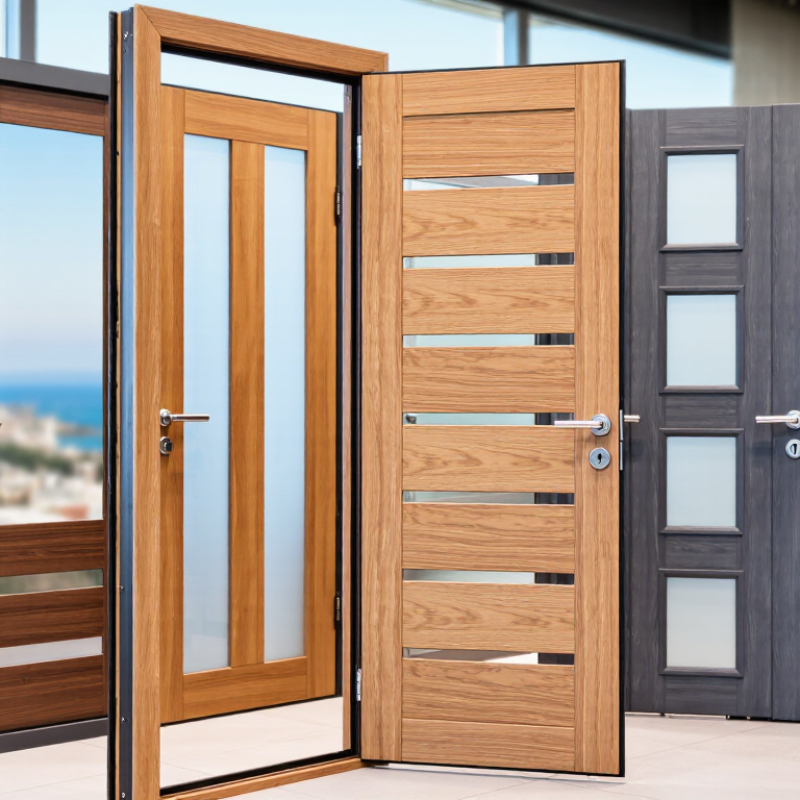
Fiberglass front doors are built with a reinforced polymer skin around an insulated core. Their surface can imitate painted wood, smooth panels, or fine-grain texture. Beneath the skin, foam insulation helps reduce heat transfer through the entrance. This layered construction gives the door strength without the weight of solid timber. It also resists swelling, splitting, and moisture damage better than many traditional wood doors.
Global buyers choose fiberglass doors for practical reasons. In humid coastal regions, the material generally handles damp air and rain with less routine maintenance. In colder climates, an insulated core can support a warmer interior entryway. In sunny locations, a suitable exterior finish helps reduce fading and surface wear. That matters at the threshold.
Still, fiberglass is not magic. A poorly fitted door can leak air, admit water, or close unevenly. The frame, sill, hinges, weather seals, and installation quality matter as much as the panel. Buyers should check tested U-values, air leakage, water resistance, and wind-load performance for their climate. Local building requirements also differ. Ask for documented test results, warranty terms, repair guidance, and installation details. Some textured finishes look convincing but may feel less natural than real wood. That tradeoff deserves honest consideration. A dependable choice is not simply the heaviest or most attractive door; it is the one matched to the building, weather, and installer.
2026 Best Fiberglass Front Doors for Global Buyers?
What Fiberglass Front Doors Are and Why Global Buyers Choose Them
Fiberglass-reinforced polymer typically has much lower thermal conductivity than steel, which can help reduce heat transfer through the door material. Actual whole-door performance also depends on the core, weatherstripping, frame, glazing, installation quality, and local climate requirements.
Data shown are representative room-temperature material conductivity values in W/m·K: fiberglass-reinforced polymer 0.3–0.5, wood 0.12–0.20, and steel 45–60. Values vary by formulation, moisture content, temperature, and construction.
Key Features to Compare in 2026 Fiberglass Front Doors
Choosing the best fiberglass front door in 2026 requires more than comparing appearance and price. In practical inspections, I look at the door slab, frame, glazing, hardware, and installation details together. A textured fiberglass surface can resemble painted timber, while resisting dents and moisture better in demanding climates. However, texture quality varies. Request close-up samples before ordering.
Thermal performance deserves careful attention. Compare the core material, weatherstripping, threshold design, and tested U-value. Look for low-emissivity glass if strong sunlight or cold winters are common. Security depends on the complete system, not only the lock. Check hinge reinforcement, multipoint options, frame strength, and clear installation instructions. I once focused too heavily on the slab design. That was a mistake. Poor fitting later caused drafts and uneven closing.
Tips: Confirm the rough opening dimensions with a local installer. Ask for the complete performance report, not just marketing figures. Check whether replacement glass and hardware are available in your region. A factory finish may appear perfect indoors, but color can change under intense sun. Test the sample outside when possible. Also review warranty terms, packaging protection, lead time, and door swing direction. Small omissions create expensive delays. A beautiful door still needs accurate measurements, suitable drainage, and careful sealing.
Top Fiberglass Front Door Styles for Different Climates and Homes
2026 Best Fiberglass Front Doors for Global Buyers?
Top Fiberglass Front Door Styles for Different Climates and Homes
Fiberglass front doors suit many climates because they resist moisture, insects, and surface cracking. Their molded grain can resemble oak without demanding yearly staining. In humid coastal homes, a smooth fiberglass slab with marine-grade hardware reduces maintenance around the threshold. For cold regions, insulated cores and adjustable weatherstripping matter more than decorative glass. The U.S. Department of Energy identifies air leakage as a major source of residential energy loss, so a tight frame is essential.
Hot climates need different choices. A pale finish can reduce heat absorption, especially on a west-facing entrance. Low-emissivity glass can also limit solar heat, but its performance depends on the complete door assembly. NFRC certification helps buyers compare tested U-factor and solar heat gain values. In windy or storm-prone areas, choose a tested door system, not only a strong-looking panel. FEMA guidance emphasizes verified impact protection and correct installation in high-wind zones.
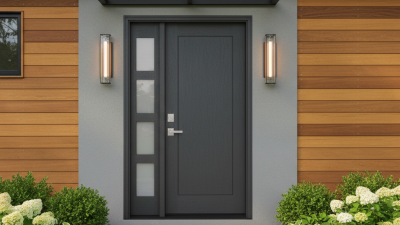
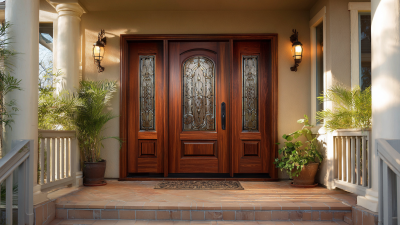
Tips: Match the door to the climate first. Check the frame, sill, glass, and seals together. Ask for testing documents. Measure twice. I have seen attractive doors fail because installers ignored drainage or uneven masonry. That mistake is easy to underestimate. Traditional raised panels suit classic homes, while flush slabs fit modern facades. A narrow vertical glass panel brings daylight, but privacy may suffer. The best style is not always the most expensive; it is the one that performs reliably at your entrance.
How to Evaluate Energy Efficiency, Security, and Durability
2026 Best Fiberglass Front Doors for Global Buyers?
Energy efficiency begins with measured performance, not a thick-looking slab. The U.S. Department of Energy recommends comparing U-factor, solar heat gain coefficient, and air leakage. Lower U-factor usually means better insulation. NFRC labels provide these values for tested door assemblies, not just the center panel. Check the frame, glazing, threshold, and weatherstripping together. A door can feel solid while leaking cold air beneath it. In hot climates, a lower solar heat gain coefficient can reduce unwanted indoor heat. Climate zones still matter.
Security needs more than a decorative lock. Look for a reinforced strike area, long structural screws, strong hinges, and a multi-point locking system. ASTM F476 offers recognized test methods for residential door assemblies, including resistance to forced entry. However, laboratory performance cannot fully predict poor installation. I would inspect the jamb alignment and ask for documented test results. Small gaps are not harmless.
Fiberglass generally resists moisture, dents, and seasonal movement better than many wood assemblies. Yet surface damage, neglected seals, and water trapped around the sill can shorten its service life. The U.S. National Fenestration Rating Council emphasizes whole-unit ratings, which supports evaluating the complete installed system. Ask for warranty conditions, replacement-part availability, and independent test documentation. One uncomfortable point: “maintenance-free” is rarely realistic. A yearly inspection takes minutes, but buyers often skip it. That decision may cost more than the door.
2026 Best Fiberglass Front Doors for Global Buyers? - How to Evaluate Energy Efficiency, Security, and Durability
A standards-based comparison framework for evaluating fiberglass exterior entry doors across different climates, building codes, and installation conditions.
| Evaluation Dimension | Recommended Benchmark for a High-Performance Door | Useful Technical Data | How to Verify It | Global Buyer Relevance | Performance Priority |
|---|---|---|---|---|---|
| Thermal Insulation | Low whole-door U-factor appropriate for the target climate | For many cold and mixed climates, target a certified whole-door U-factor of approximately 1.0–1.8 W/m²·K or lower. Lower values indicate less heat transfer. | Request a complete-door rating rather than a center-panel value. Look for NFRC-certified data, EN 14351-1 performance information, or an equivalent accredited laboratory report. | Important in cold climates and useful in mixed climates. In hot climates, combine low heat transfer with solar-control glazing and effective weather seals. | High |
| Solar Heat Gain | SHGC selected according to local solar exposure and cooling demand | A lower Solar Heat Gain Coefficient reduces solar heat entering through glazed areas. Typical selection ranges are approximately 0.25–0.40 for strong cooling climates and 0.40–0.60 where useful winter solar gain is desired. | Check the glazing assembly's SHGC and visible transmittance. Do not evaluate a glazed door by the fiberglass panel alone. | Particularly relevant in tropical, subtropical, desert, and high-sun regions. Orientation, overhangs, and exterior shading can materially change results. | High |
| Air Leakage | Low tested air infiltration at the complete-door assembly | Prefer an independently tested assembly with low air leakage, such as approximately 0.3–0.5 L/s·m² at 75 Pa or better where the applicable standard uses this metric. Test units and limits vary by region. | Review reports based on ASTM E283, EN 1026/EN 12207, or an equivalent local standard. Confirm whether the value applies to the whole door, frame, and weather-stripping system. | Reduces drafts, dust entry, humidity movement, and conditioned-air loss. Installation quality is as important as the laboratory rating. | High |
| Water Penetration | Water resistance suitable for wind-driven rain at the project location | Select a tested water-penetration pressure appropriate to local exposure. Residential exterior doors commonly require testing at pressures around 140–300 Pa or higher, depending on the code and product class. | Request a test report under ASTM E331, ASTM E547, or EN 1027. Check sill drainage, corner seals, threshold design, and the required installation details. | Critical for coastal, monsoon, hurricane, typhoon, and high-rainfall regions. A high laboratory rating cannot compensate for an incorrectly flashed or unsealed opening. | Critical |
| Wind Load and Structural Strength | Design pressure and cyclic performance matched to the building site | The required design pressure depends on wind speed, building height, exposure category, opening size, and local code. High-wind projects may require tested pressures of ±1.5 kPa or more. | Ask for structural test results under ASTM E330/E330M, EN 12211, or the applicable regional standard. Verify frame anchorage, hinge reinforcement, lock-side reinforcement, and threshold support. | Essential in coastal and storm-prone areas. The door slab, frame, hardware, fasteners, and wall connection must be evaluated as one system. | Critical |
| Security and Forced-Entry Resistance | Reinforced assembly with independently tested hardware and frame | Look for a multi-point or reinforced single-point locking system, adjustable hinges, a reinforced strike area, a substantial frame, and laminated or impact-resistant glazing where needed. | Request a complete-door forced-entry test, not only a lock certificate. Depending on the market, review EN 1627 resistance classes, PAS 24, ASTM F476, or an equivalent recognized test. | Requirements differ substantially by country. Glazing, sidelites, transoms, hinges, cylinder protection, and the frame can determine the real security level. | Critical |
| Glazing Safety | Safety glazing and impact resistance appropriate to door location | Use tempered or laminated safety glass where required. Laminated glass generally remains attached to its interlayer after breakage and can provide improved security and storm protection. | Check markings and documentation against ANSI Z97.1, CPSC 16 CFR 1201, EN 12600, or the applicable national safety-glazing requirement. | Important for doors, sidelites, low glazing, child-accessible areas, and regions exposed to severe weather or accidental impact. | Critical |
| Fiberglass Skin and Core | Moisture-resistant skin with a stable, insulated core | Fiberglass-reinforced polymer skins resist corrosion and do not rot like untreated wood. Polyurethane or similar insulated cores can improve thermal performance; actual results depend on thickness, density, edge construction, and glazing. | Request product-section drawings, core specifications, moisture-exposure limitations, and accelerated-aging or durability test information where available. | Suitable for humid, coastal, and termite-prone locations when the complete system is properly sealed. Fiberglass does not eliminate the need to protect joints and cut edges. | High |
| Dimensional Stability | Low warping and reliable operation across expected temperature changes | Pay attention to slab construction, stile and rail reinforcement, hinge spacing, panel width, dark-color surface temperature, and tolerance control. Oversized or dark doors can experience greater thermal movement. | Review cycling, thermal-exposure, and operating-force test data when available. Confirm maximum size limits and installation clearances. | Especially relevant in hot climates, high-altitude locations, large openings, and installations with strong direct sunlight. | High |
| Weather-Seal System | Replaceable compression seals plus a durable sill and sweep | A high-performing system normally includes perimeter weather-stripping, corner sealing, a threshold gasket, a door sweep, and a sill that drains water away from the opening. | Inspect cross-section drawings and replacement-part availability. Confirm seal compatibility with the selected climate, exposure, and door-swing configuration. | Directly affects air leakage, water resistance, acoustic comfort, and long-term operating force. Replacement seals should be available locally or internationally. | Critical |
| Corrosion Resistance | Hardware and fasteners selected for the exposure category | Use corrosion-resistant hinges, screws, strike plates, thresholds, and drainage components. Stainless steel or suitably protected hardware is generally preferable in coastal or salt-air areas. | Ask for material specifications and salt-spray or corrosion-test information where relevant. Confirm that dissimilar-metal contact is controlled. | Fiberglass itself is corrosion-resistant, but hardware, fasteners, thresholds, and drainage paths can still fail in marine environments. | High |
| Acoustic Performance | Rated sound-reduction performance appropriate to the surrounding noise | Look for a complete-door Sound Transmission Class or weighted sound-reduction rating. Glazing, perimeter seals, and threshold gaps often control the result more than the slab core. | Request laboratory results under ASTM E90, ISO 10140, or the relevant local method. Avoid comparing a panel-only rating with a whole-door rating. | Valuable for urban homes, apartments, roadside properties, and locations near airports or industry. | Medium–High |
| Fire and Smoke Considerations | Use only where the complete assembly has the required fire rating | A standard fiberglass entry door should not be assumed to be fire-rated. Fire performance depends on the slab, frame, glazing, seals, hardware, and installation configuration. | Request a complete-assembly certification under the applicable local fire standard, such as UL 10C, NFPA 252, EN 1634-1, or an equivalent national test. | Relevant for openings near garages, protected escape routes, multi-family buildings, and commercial applications. Local code takes priority over general product claims. | Critical Where Applicable |
| Finish and UV Resistance | Exterior coating system rated for the intended sunlight and maintenance conditions | UV exposure can cause fading, chalking, gloss loss, or color variation. Dark finishes generally absorb more solar heat than light finishes. | Request coating-care instructions, color limitations, warranty exclusions, and accelerated-weathering data where available. Confirm whether field painting is permitted. | Important in tropical, desert, high-altitude, and high-UV regions. Follow the specified cleaning schedule and avoid unapproved coatings. | High |
| Installation Compatibility | Door, frame, sill, wall, flashing, and hardware designed as a compatible system | Confirm rough-opening dimensions, wall thickness, sill height, handing, swing direction, threshold accessibility, anchorage, drainage, and compatibility with local wall construction. | Obtain an installation manual before purchase. Check whether the test report applies to the exact frame type, sill, configuration, and anchoring method being specified. | A major factor for international buyers because masonry, concrete, timber, and light-frame installation practices differ by market. | Critical |
| Maintenance and Service Life | Replaceable components and documented maintenance procedures | Inspect seals, hinges, lock cylinders, sweeps, glazing gaskets, finish-care requirements, and expected replacement intervals. Fiberglass skins typically need less repainting than wood, but hardware and seals remain service items. | Request a parts list, maintenance schedule, warranty terms, and service contact applicable to the buyer's country. | Local availability of replacement parts can have a greater lifetime effect than a small difference in the initial purchase price. | High |
| Environmental Documentation | Transparent material, energy, and compliance documentation | Useful documents include environmental product declarations, recycled-content information, responsible packaging data, and declarations of regulatory compliance. | Prefer independently verified documentation and clearly defined scopes. Distinguish a complete door's environmental data from data for the fiberglass skin alone. | Increasingly important for green-building projects, public procurement, and markets with product transparency or embodied-carbon reporting requirements. | Medium–High |
| Warranty and Compliance | Written coverage that clearly separates slab, finish, glass, hardware, and installation | Compare warranty duration, geographic validity, finish exclusions, coastal limitations, glass coverage, hardware coverage, and conditions related to installation and maintenance. | Read the complete warranty before ordering. Verify the seller's responsibility for transport damage, customs handling, field modification, and claims support. | Particularly important for cross-border purchases where replacement logistics, labor costs, and legal remedies may differ from the buyer's home market. | High |

Global Buying Guide: Sizes, Certifications, Shipping, and Installation
Global buyers should confirm the door size before requesting a quotation. Common slabs measure 80 inches high, but 96-inch options are increasingly available. Widths often range from 30 to 42 inches. Measure the rough opening, wall thickness, threshold space, and swing direction. Do not rely only on an old drawing.
Certification requirements vary by destination. Ask for test reports covering air leakage, water resistance, structural pressure, thermal performance, and fire rating when required. Confirm whether documents match the exact door configuration, including glass, hinges, frame, and hardware. A certificate for another model may not be acceptable. Check local building codes with a qualified inspector.
Shipping needs careful planning. Request moisture-resistant packaging, corner protection, and a visible packing list. Photograph the crate before opening it. Inspect the slab, frame, glass, and threshold immediately. Small damage can become expensive after installation. Sea freight may require longer lead times, while air freight costs more and may limit package sizes.
Installation depends on a square, stable opening. Set the sill level, place shims behind each hinge, and check the frame diagonals before fastening. Leave suitable clearance for seasonal movement. Use compatible flashing and low-expansion foam around the frame. A rushed installation can cause drafts, binding, or water entry. I have seen accurate measurements fail because the floor was not level. Local installation practice still matters.
Related Posts
-
Global Manufacturing Excellence Crafted in China with Premium Fiberglass Front Doors
-
Top 10 Benefits of Fiberglass Front Doors for Your Home
-
5 Tips for Choosing the Best Fiberglass Doors for Your Home
-
China Top 10 Fiberglass Exterior Door Suppliers
-
Exploring the Unique Features and Ideal Applications of Best Fiberglass Front Doors with Buying Tips
-
Transform Your Business with High-Performance Fiberglass Doors: A Global Market Overview