What Are the Top House Door Types in 2026?

In 2026, choosing among House Doors means balancing appearance, daily use, security, and energy performance. A door may look striking in a showroom but feel awkward when it meets a narrow hallway or a muddy boot. Small details matter. The swing direction, threshold height, glazing, and available wall space can change how well a design works at home.

This guide compares popular options, including classic hinged doors, space-saving sliding doors, French doors, pivot doors, and folding designs. It also considers materials, insulation, maintenance, and where each type tends to fit best. Architectural critic John Ruskin offered a useful reminder about durability: “When we build, let us think that we build for ever.” His words are not a door-buying checklist, of course. Still, they point toward a practical question: will the door serve the household beyond its first impression?

There is no single winner for every home. A glazed door can brighten a dim entry, yet it may offer less privacy. A solid timber door feels substantial, but it needs suitable care. That trade-off is easy to overlook. The sections ahead outline what to compare, which details deserve a closer look, and how to match a door type to the opening, climate, and routines of the people who use it.
What Are the Top House Door Types in 2026?

How House Door Types Are Classified

House doors are easier to compare when classified by more than appearance. A useful first category is how each door moves. Hinged doors swing from side-mounted hinges, while sliding doors travel along a track. Folding doors use linked panels; pivot doors rotate around a point set away from the edge. Check the available clearance. A swing door needs room for its arc, while a slider needs wall space and a clean track. This practical distinction often matters more than a decorative label.

Doors can also be grouped by location and purpose. Exterior entry doors face weather and security demands, while interior doors divide rooms and support privacy. Patio doors often prioritize wide openings and daylight. Material is another category: wood, steel, fiberglass, glass, and composite constructions differ in weight, upkeep, and insulation. Names can overlap. An insulated exterior door, for example, describes both its position and performance.

Construction provides another useful lens. Solid-core and hollow-core interior doors may look similar, yet differ in weight, sound control, and feel when they close. Glazed panels bring light into a hallway, but their size and placement affect privacy. Compare the door slab, frame, seals, and hardware as a system. A category alone cannot confirm fit or energy performance; measurements and product specifications still matter. Classification is helpful, not perfect.

Main Entry Doors: Wood, Fiberglass, and Steel

What Are the Top House Door Types in 2026?
Main Entry Doors: Wood, Fiberglass, and Steel

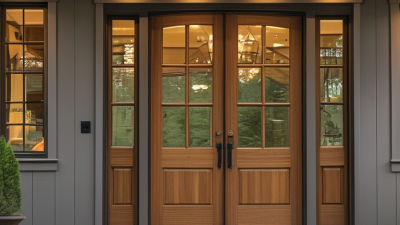
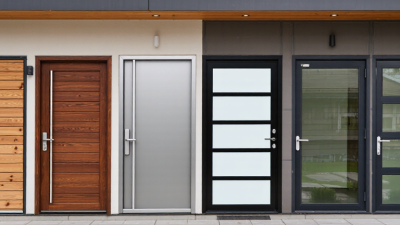
For a main entry door, wood, fiberglass, and steel each solve different problems. Wood brings natural grain and a solid feel under the hand. It can be painted or stained, but exposed edges and worn finishes may need regular care. Fiberglass resists moisture and often mimics wood grain without the same upkeep. Steel is typically sturdy and can offer good insulation when its core and seals are well made. Still, dents can be difficult to disguise.

Look closely at your entry’s conditions. A sheltered porch may protect wood from rain and harsh sun. A damp or exposed entrance may favor fiberglass. Steel can suit a busy household, though its finish and frame deserve attention. No material is automatically the most energy-efficient; the door’s fit, weatherstripping, and installation matter too. A small gap at the threshold can let in a noticeable draft.

Tips: Check the door’s edges, hinges, and threshold before choosing. Ask how the finish handles your local weather. Compare maintenance needs, not just purchase price. If possible, stand near a sample and test its weight and latch. Details can change the decision. Even then, the perfect choice may involve a trade-off.

What Are the Top House Door Types in 2026? — Main Entry Doors: Wood, Fiberglass, and Steel

Comparison Wood Fiberglass Steel
Typical construction Solid wood or engineered wood, often with rails, stiles, and panels. Molded fiberglass skins, commonly bonded to an insulated core and a wood or composite frame. Steel skins, commonly formed around an insulating foam core and a wood or steel frame.
Appearance Natural grain and texture; can be stained or painted. Styles and grain vary by wood species and construction. Can be molded with wood-grain textures or finished with paint; offers a range of panel designs. Typically has a smooth or embossed surface and is usually painted; can suit both traditional and modern designs.
Insulation and energy use Insulating performance varies with wood type, door thickness, glazing, seals, and overall construction. Many models have an insulated core and can provide good thermal performance when properly fitted and weather-sealed. Many models use an insulated core; performance depends on the complete door assembly, including its edges, glazing, and seals.
Weather and moisture More sensitive to moisture and changing humidity; may swell, shrink, or warp if exposed or poorly maintained. Generally resists moisture-related swelling and warping, though the finish and seals still need care. Does not typically warp like wood, but exposed or damaged steel can rust; the finish should be kept intact.
Maintenance Usually needs periodic inspection and refinishing or repainting, especially on exposed surfaces. Usually needs routine cleaning and inspection of the finish, hardware, and weatherstripping. Usually needs routine cleaning and finish checks; repair scratches or chips to help protect against corrosion.
Impact and damage considerations Can dent, split, or show surface wear; repairability depends on the wood and the extent of damage. Can be durable in everyday use, but severe impact may crack or damage the skin. Can resist many everyday impacts, but the skin may dent; damaged coatings can expose the steel to moisture.
Security considerations Security depends on door construction, frame, hinges, lock, and installation—not wood alone. Security depends on the door’s construction, frame, hardware, lock, and installation—not the material alone. Security depends on the complete assembly, including the frame, hinges, lock, and installation—not the steel skin alone.
Relative cost tendency Can range from moderate to high; species, solid-wood construction, custom sizing, and finish affect cost. Often positioned in the middle to higher part of the market; construction, glazing, and finish affect cost. Often available at a lower initial price than many comparable wood or fiberglass models; features and finish affect cost.
A good fit for Homeowners prioritizing natural material, distinctive grain, and the option to refinish. Homeowners seeking a low-maintenance door with an insulated core and a wood-like appearance. Homeowners seeking a practical, commonly cost-conscious option with an insulated-core choice.

Performance varies by model, installation, climate, glazing, frame, and weatherstripping. Compare complete door assemblies and check applicable energy ratings and local building requirements before purchasing.

Patio Doors: Sliding, French, and Folding Designs

Patio doors shape how a home connects to its yard, but each design behaves differently. Sliding doors move along a track, so they need little clearance beside a dining table or sofa. Their wide glass panels bring in daylight, though the fixed panel limits the opening. French doors swing inward or outward. They offer a familiar, balanced look, but need clear floor space. Folding doors stack panels to create a broad opening. They suit entertaining, yet their tracks and hardware need regular cleaning. A little grit can make movement feel rough.

Measure the opening, nearby furniture, and outdoor landing before choosing. The U.S. Department of Energy estimates that windows account for 25–30% of residential heating and cooling energy use; this is not a patio-door estimate, but it underscores the value of checking glass and frame performance. Compare whole-unit U-factor and solar heat gain coefficient, not glass alone. The 2024 Houzz & Home Study reported a $24,000 median renovation spend for U.S. homeowners in 2023. That figure covers renovations broadly, not patio doors, but it is a useful reminder to budget for installation and finishing. Details matter. Check drainage, thresholds, and how easily each panel can be operated. Folding systems look effortless in photos; in a tight, windy space, they may feel less convenient.

Interior Doors: Panel, Flush, Pocket, and Barn Styles

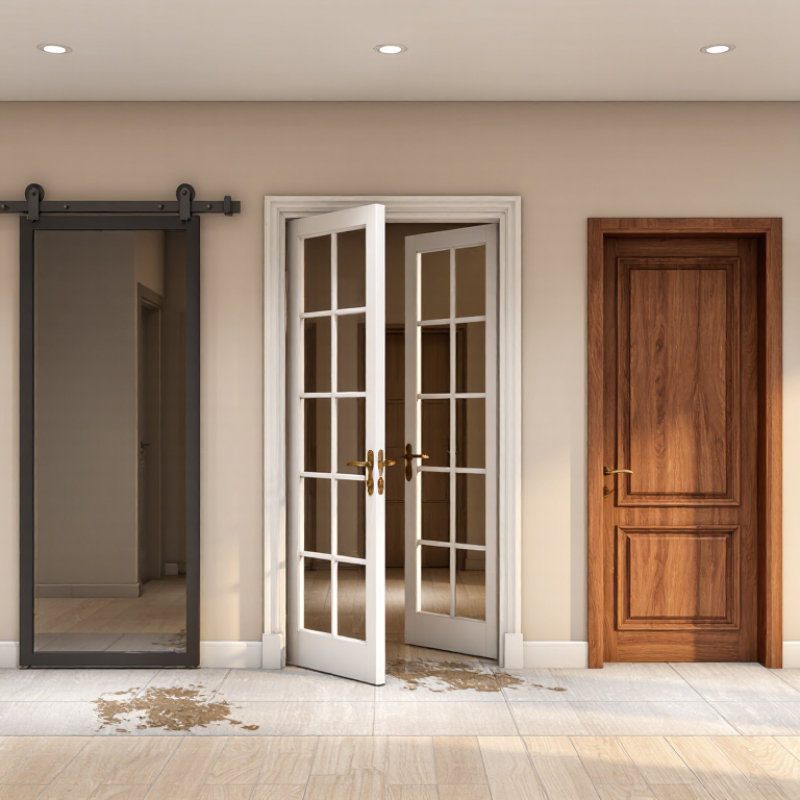
Interior doors shape how a home feels and functions. Panel doors add visible structure, with recessed or raised sections that suit both traditional and transitional rooms. Their edges collect dust, though, and detailed profiles can be harder to clean. Flush doors offer a simpler surface and a quieter visual effect. They often work well in modern spaces, but a plain finish may show dents or scratches more readily.

Pocket doors slide into a wall cavity, saving floor space in tight bathrooms, closets, and hallways. Check the wall before choosing one: plumbing, wiring, or structural supports may limit installation. Sound privacy can also be weaker than with a well-fitted hinged door. Barn-style doors slide along an exposed track, making them a striking option for bedrooms or living areas. Looks matter. They need clear wall space beside the opening, and gaps around the door can reduce privacy.

The right choice depends on the room, not just the trend. Measure the opening and nearby furniture, then consider noise, light, and how often the door will be used. A solid-core panel door may suit a busy bedroom, while a flush door can keep a small room visually calm. Pocket and barn doors solve specific layout problems, but neither is a universal upgrade. It is easy to focus on style and overlook the hardware; that detail deserves a second look.

Top Interior Door Types in 2026: A Practical Comparison

Compare panel, flush, pocket, and barn doors across common planning considerations.

Ratings are indicative qualitative comparisons on a 1–5 scale, not standardized test results. Actual privacy, space requirements, installation effort, and design options vary with materials, hardware, and the specific installation.

How to Compare Doors by Security, Efficiency, and Space Needs

A door should match its job, not just the look of the house. For a main entrance, a solid-core or steel door can provide a sturdy barrier, but the frame, hinges, and deadbolt matter too. A strong slab fitted poorly may still leave gaps. Check that the door closes evenly and that the strike plate is firmly secured.

Efficiency depends on more than the door material. Fiberglass and insulated steel entry doors can help limit drafts when weather seals fit tightly. Run a hand around the closed door on a cold day; a noticeable chill may point to worn seals or a poor fit. Solid wood has a classic feel, though it may need more upkeep as moisture and temperature change. Ratings and construction vary, so compare product specifications rather than relying on material names alone.

Space can change the best choice. Sliding doors suit patios where a swinging panel would block furniture, while pocket doors disappear into a wall and free up floor area. Hinged doors are familiar and often simpler to secure, but need clear swing space. There is no perfect option. A pocket door can save room, yet repairs inside the wall may be less convenient. Measure the opening, nearby furniture, and traffic path before deciding.